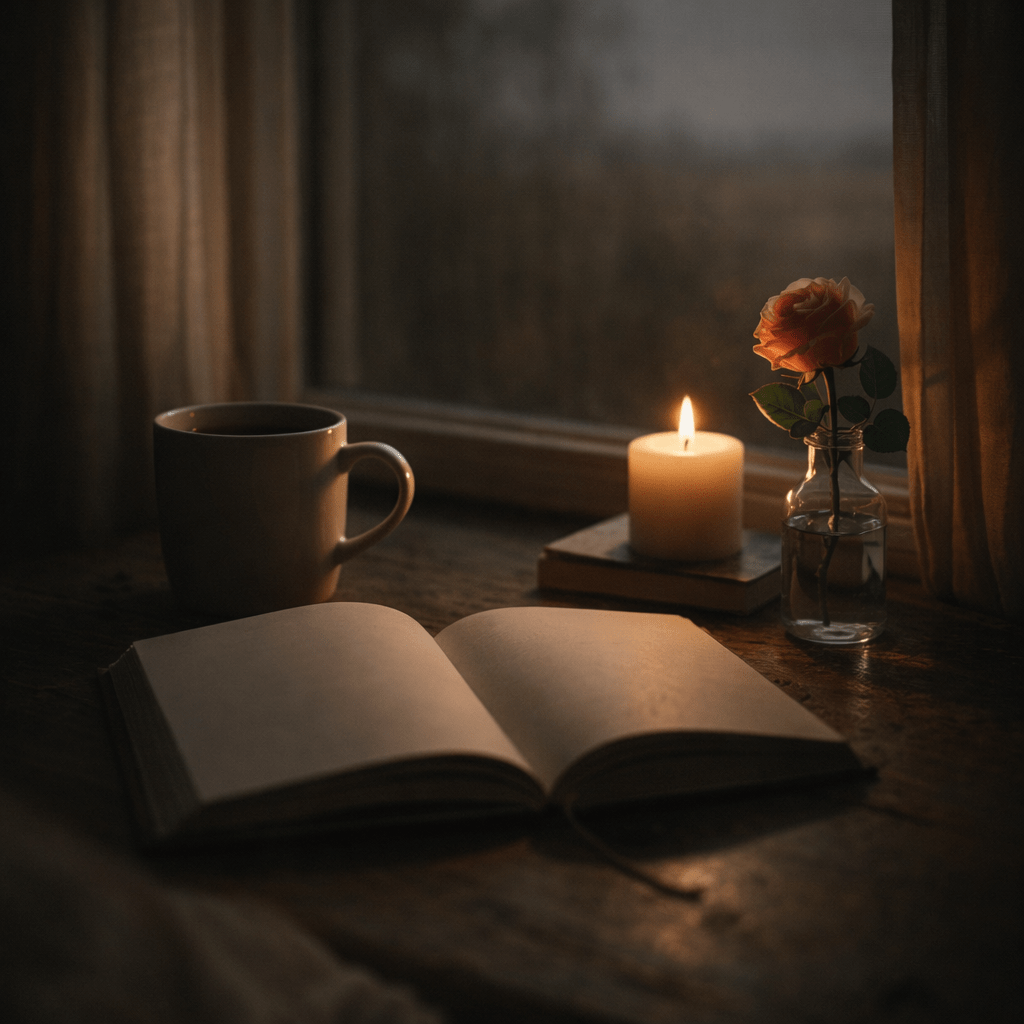
It’s been a while.
Longer than I intended. Longer than I planned.
And if you’ve been here before, reading Awakened Living, I want to begin by saying this simply and honestly:
I didn’t forget this space.
I didn’t abandon it.
I didn’t stop caring.
Life took over — in the way life sometimes does — not loudly, but fully.
The last few months required my attention in places that didn’t leave much room for sharing. Responsibilities. Emotions. The quiet work of getting through days that didn’t need explaining, only living. And in that season, I chose presence over performance.
But something else was happening too.
The Work I Went Into
While I wasn’t writing here, I was writing — deeply, privately, steadily.
I went inward.
I followed threads I couldn’t ignore anymore.
Questions that didn’t want quick answers.
Stories that needed patience instead of polish.
Much of that time was spent working on Rose of No Man’s Land — a project that asked more of me than I expected. Not just as a writer, but as a person willing to sit with memory, meaning, and the parts of life that don’t resolve neatly.
This wasn’t productivity for the sake of output.
It was the slow kind of work.
The kind that changes you while you’re doing it.
And I needed to let it have my full attention.
Why I’m Sharing This Now
I don’t believe we owe constant updates or explanations to exist online. But I do believe in honesty — especially in a space like this one, where reflection and awareness are the foundation.
So this isn’t an apology rooted in guilt.
It’s an acknowledgment rooted in respect.
If you’ve returned here wondering where I went — this is where.
Living. Writing. Becoming quieter before becoming clearer.
Where Awakened Living Fits Now
This blog has always been about noticing life as it unfolds — not presenting a perfected version of it. And that hasn’t changed.
What has changed is my understanding of what it means to live awake.
Sometimes awareness doesn’t look like sharing insights in real time.
Sometimes it looks like stepping back, listening, and letting the meaning arrive before the words do.
Out of that quiet season came Rose of No Man’s Land — a book shaped not by answers, but by endurance. It’s a reflective work about what grows in the spaces where nothing was promised, about becoming without an audience, and about learning to belong to yourself before anywhere else. I didn’t write it to explain my life, but to make sense of it. And in many ways, it carries the same spirit as this space — just told through longer breaths and deeper pauses.
Rose of No Man’s Land grew out of that silence.
And Awakened Living is where I return to speak again.
Moving Forward
I won’t promise consistency for the sake of it.
I won’t over-schedule inspiration.
But I will be here — writing when there’s something real to say. Sharing reflections that come from lived experience, not obligation. Letting this space remain what it was always meant to be: thoughtful, human, and honest.
If you’ve stayed, thank you.
If you’re new, welcome.
And if life pulled you away too — I understand.
Sometimes we don’t disappear.
We just go quiet long enough to hear ourselves again.
- Aya Rose

 Awakened Living